Thursday, July 7, 2011

Return to Bassin Louise - Part 2

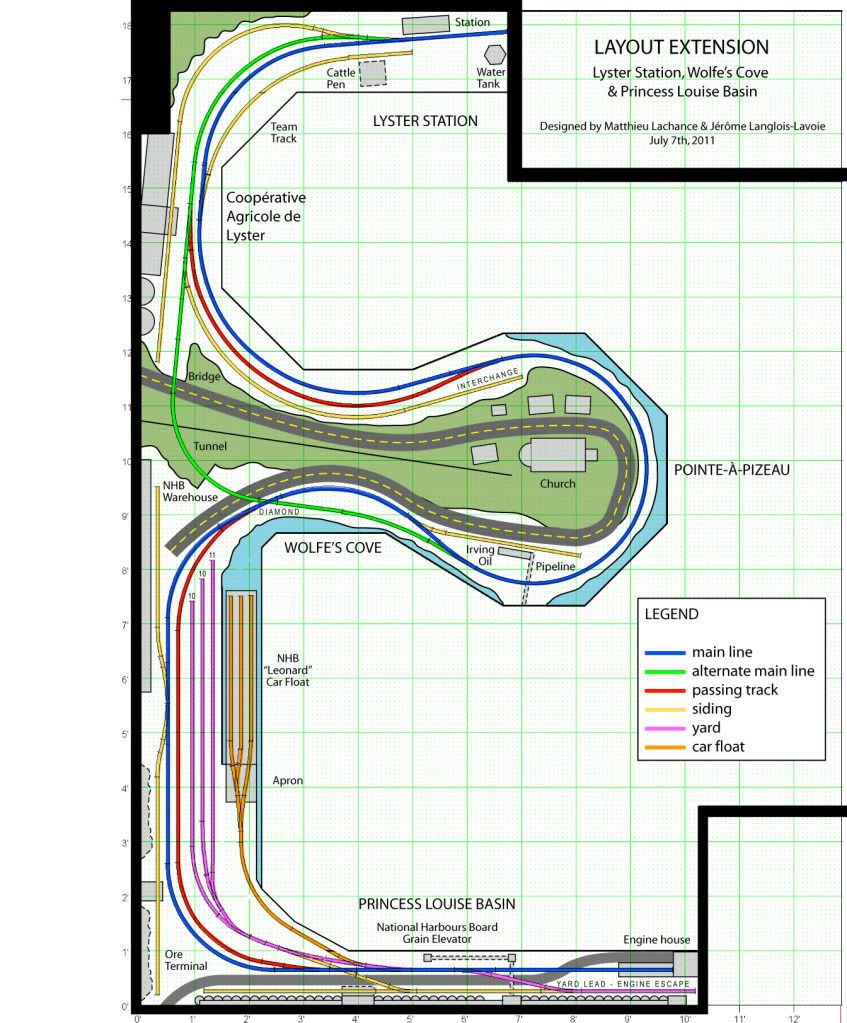
After a few comments from fellow club members, it was decided to eliminate the yard lead in the port area. We found it useless since the main line could do exactly the same job without operation issues. It is also more respectful of our prototype.

The oil platform was also trimmed to one siding only. The major difference is a new diamond to shuffle cars at the grain elevator. This device eliminated the need for a troublesome double crossover that would have been a nightmare operation with 50' cars.

Revised layout plan


I also worked on Pointe-à-Pizeau. The actual location sports a wonderful gothic church overlooking the St. Lawrence River in the same way as depicted on the layout. It will help to blend the background. I don't expect to crowd the place with a lot of buildings. We will see what we can do when we will build the cape in real life.

Second revision


I decided to eliminate the yard lead completely near the grain elevator. The siding now looks more prototypical with fewer turnouts and lesser track. Also, no more S-curves, which was an important thing I wanted.

Second revision - Third version

Wednesday, July 6, 2011

Return to Bassin Louise - Layout Extension

Funny thing, English royal couple just toured Quebec City last week-end and our layout is back to Princess Louise Basin. What happened?

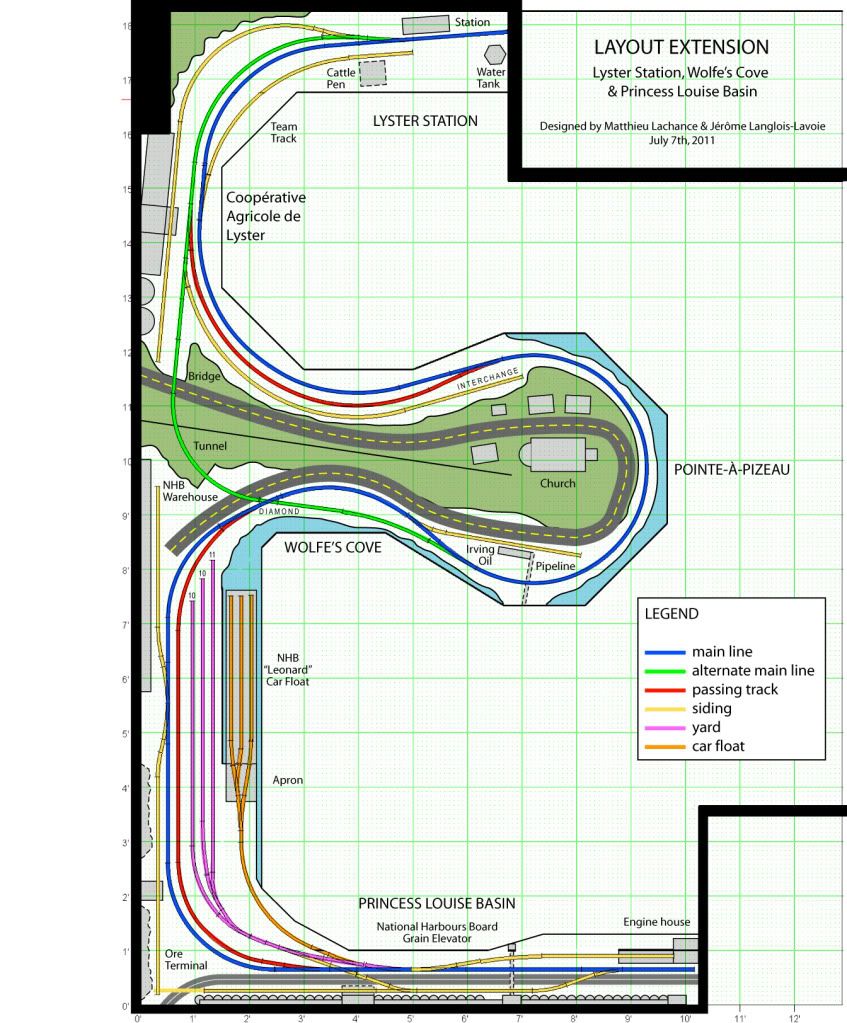
In fact there's no connection with the British Crown. To put it short, we had a little mixed feelings over the last weeks about the Murray Bay extension proposal. Benchwork had been built and looked promising. The peninsula with a central background work nicely to create two different scenes. There was a consensus among us to keep it. However, the theme and trackage our this extension remained full of question. It was like running a train to nowhere.


Last Monday, we decided to start planning a serious proposal for the extension. Over the last weeks, we already explored ideas about rolling countryside with a farmer's cooperative (mainly inspired by Lyster Station, Quebec) and bringing back the harbour scenes, notably the huge grain elevator and the car float.

I was also personally concerned about providing a mean to return trains and engine. It was decided to build a returning loop. The good thing is that it will need a tunnel and one exist in Quebec City Harbour near Wolfe's Cove (aka L'Anse-aux-Foulons). On the other hand, Lyster Station was also a junction so it will fit perfectly in the setting.

Overall, this new extension proposal will complement nicely our existing industries at Hedley. Also, the idea to have a point-to-point layout with two yards will give enough opportunities to have three people operating at the same time which was lacking on the actual setting.

The New Layout
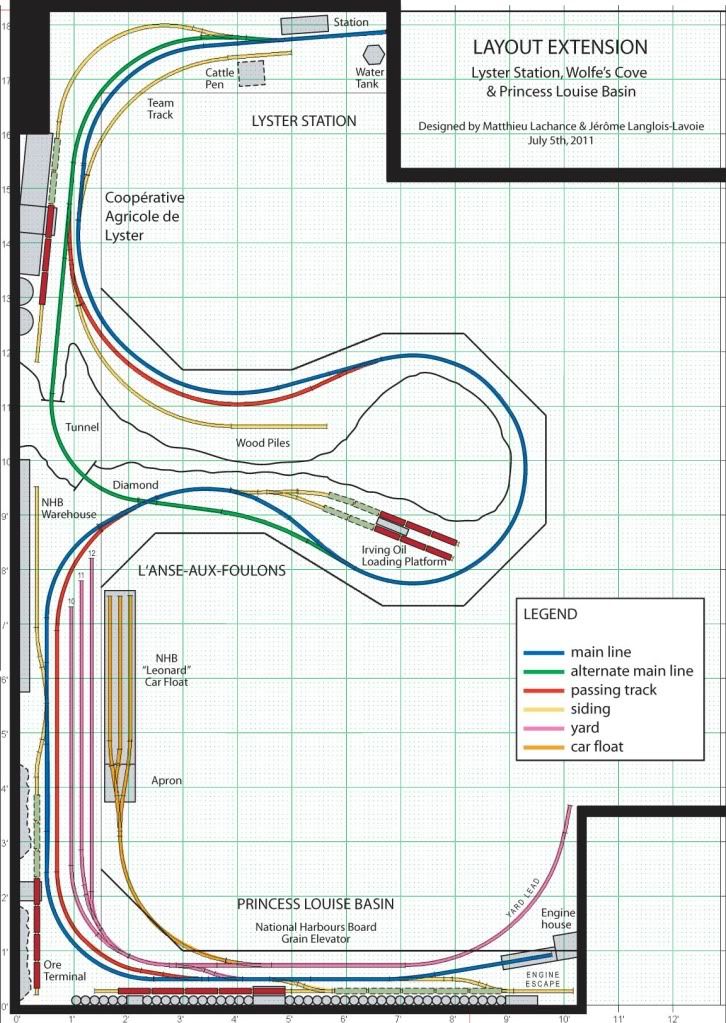
New layout extension proposal.


Design criterions:

-22" minimal radius (only once in the tunnel), average radius is between 24" and 36"
-#6 Turnouts on mainline and other places were switching can be tricky or 6-axles engines can be used
-No S-curve
-Long sidings with large industries

Typical Train Operation

Imagine a grain train leaving Hedley-Junction. It crosses the furnace tunnel and exit at Lyster Station were it must enter the passing to let pass an eastbound train. Then it exist Lyster and come near St. Lawrence River when it gently run through the peninsula ends. At this point, the train continue, pass the diamond with the diverging route and enter the yard siding. At this point, all cars are left in the siding and the engines continue to the end of the layout were they can stop at the engine house. The staff take a break, a lunch and prepare the engines for the next trip back to Hedley.

Meanwhile, a switcher exit the yard, take the train and bring him back to the yard. Grain cars are then shuffled into the grain elevator and the switcher use the small crossover at left to escape from the siding. A new train is assembled in the yard and put back in the siding. Our original crew put the caboose at the end of the new train, runaround it and finally can head back to Hedley.

Grain elevator cars will be spotted by a motorized cabestan that will move the cars without the need for a locomotive. This kind of device is often seen in this kind of industry.

As you can also see, the switcher can operate in the yard without having to use the mainline. Most industries face the same direction which will eliminate most of the tiresome runaround. Once a while is fun, too much is just a bother.


Now, time to put these idea in the "real" world.
Saturday, July 2, 2011

Improving Bachmann GP40

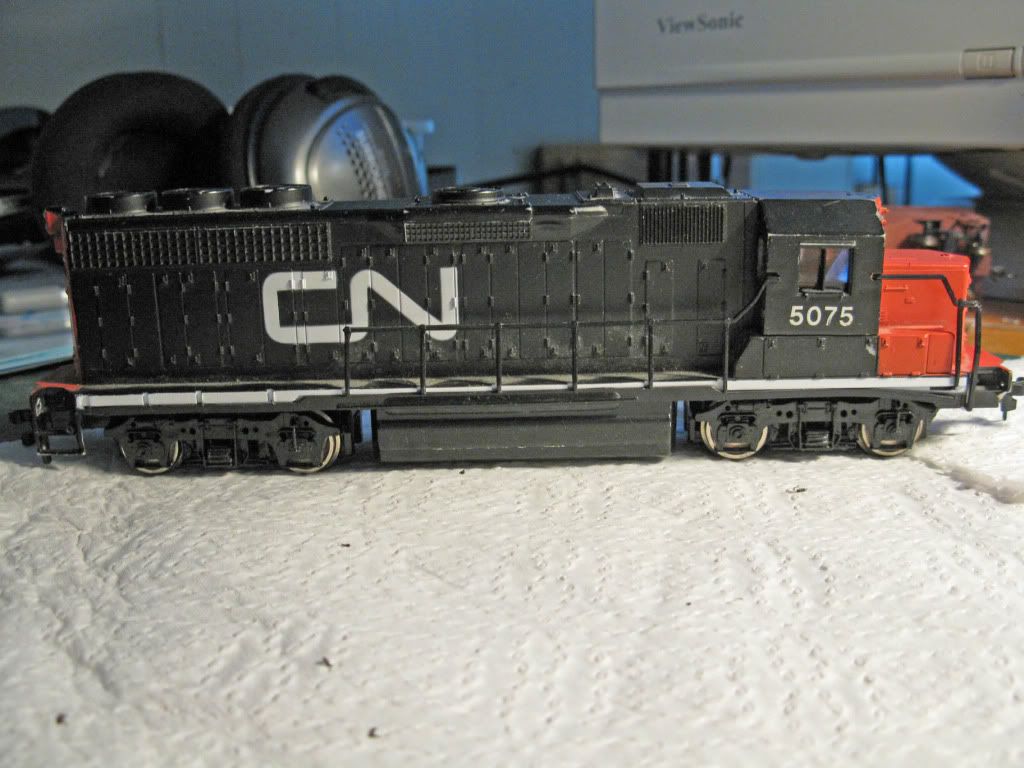
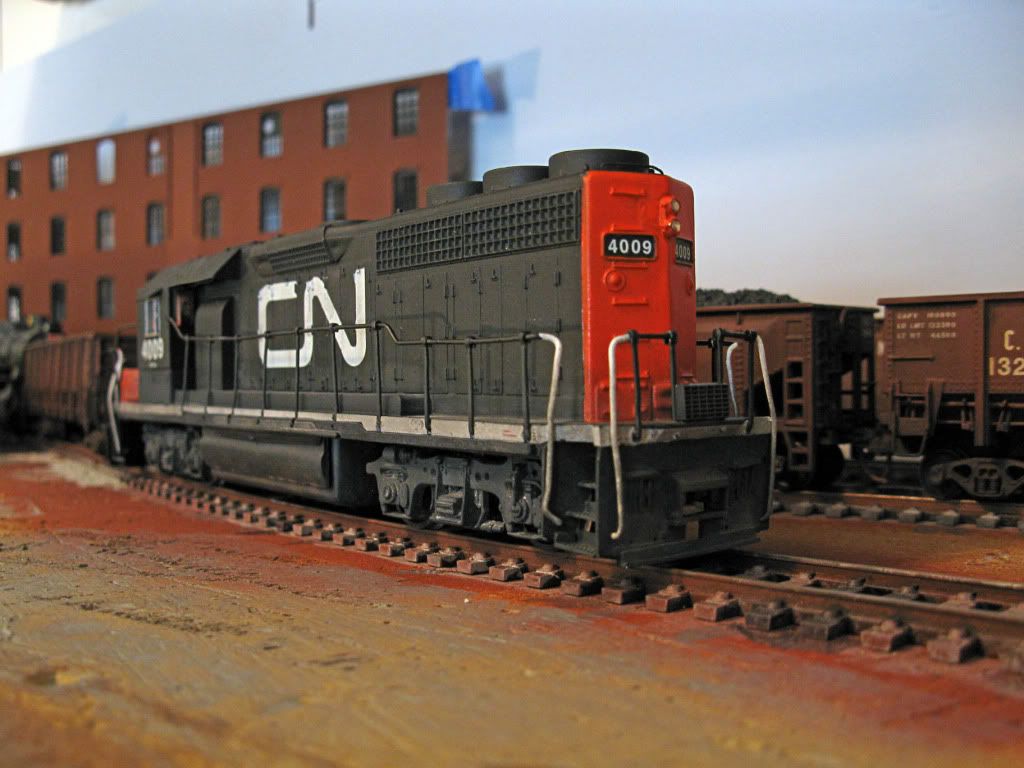
Since I recently receive my new Atlas GP40-2, I wanted to run her in consist. A few months ago, an old friend of mine whom did some modelrailroading with me as when we were teenagers gave me a box with his original cars and trains. It contained an old metal-truck Athearn GP9 and a rundown Bachmann GP40. The first one runs like a clock as it always did. The second was so bad I don't remember we ever used it on the layout back in the mid-90's. Every details was already broken on it and the motor was worthless.


Original model as received and as I always knew it.


I was a little bit reluctant to kitbash these old models. They are full of memories and remember good times when I first learn to make "real" operation sesson with my friend. However, the Bachmann engine was always an eyesore to both of us, I didn't mind to rebuild it. I even remember asking him to do this back in 1997! This long overdue work had to be done.


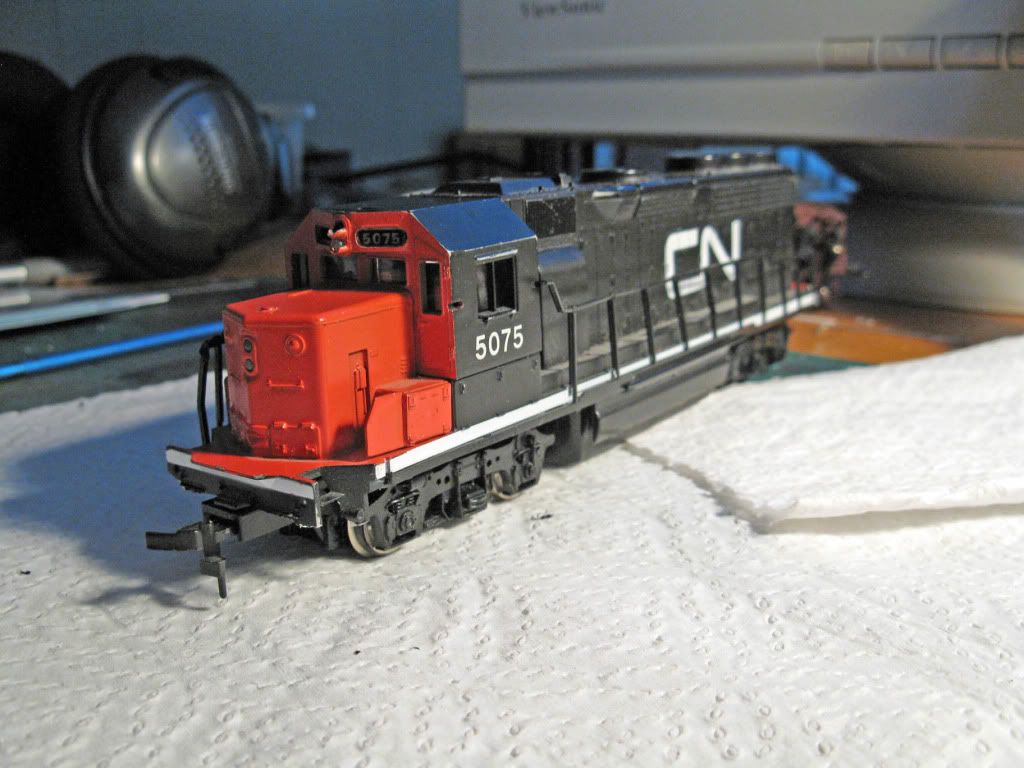
The model as it was prior to any work. Even the pilots were destroyed.


I replaced the missing pilots with a set of kitbashed stairs from an old C424 shell from Atlas. Handrails are made out of brass wire and Athearn stanchions. The bell was kitbashed from a brass steamer bell and bits of styrene. Shields were made out of styrene too and others details are remnants from previous superdetailling projects.


The redetailled model.


 Everything was repainted with Krylon black primer and True Line CN Orange and sealed with a coat of Dullcoat. Decals are from various sheets from Microscale.

Rear with new handrails. Marker lights still to be painted in silver.


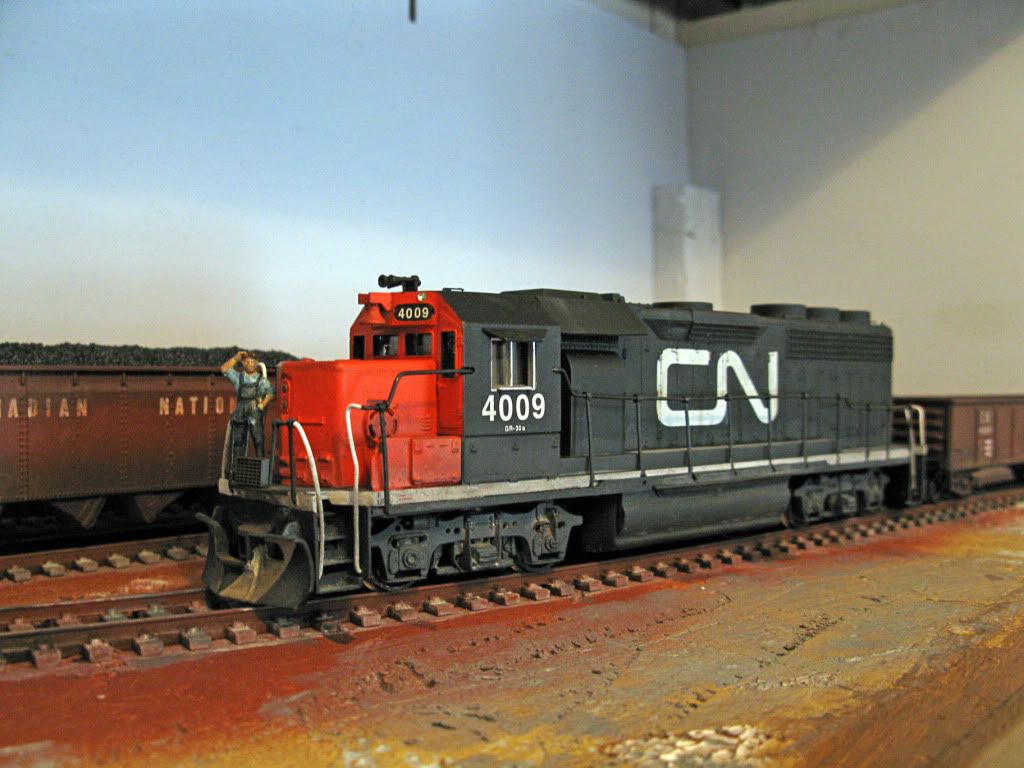
Weathering was done with a light wash of Citadel Chaos Black acrylic thinned in alcohol and pastel chalks. I tried to not overdo the weathering and to stay close to the original prototype.

Locomotive CN #4009 in 1979, cnrphotos.com (Don Jaworski), 2011

Wednesday, June 29, 2011

Upgrading Trainset Quality Cars

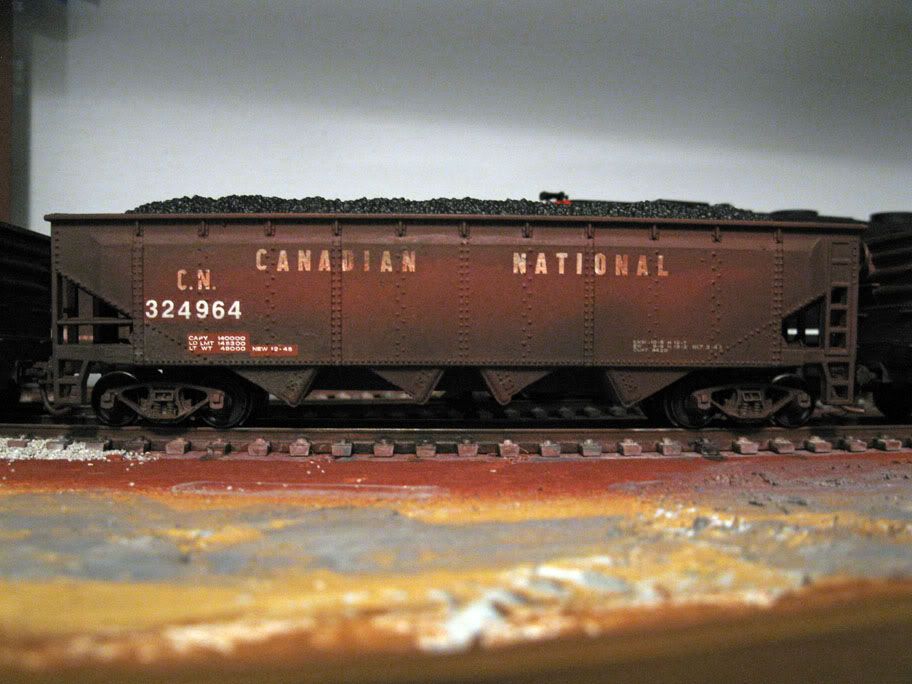
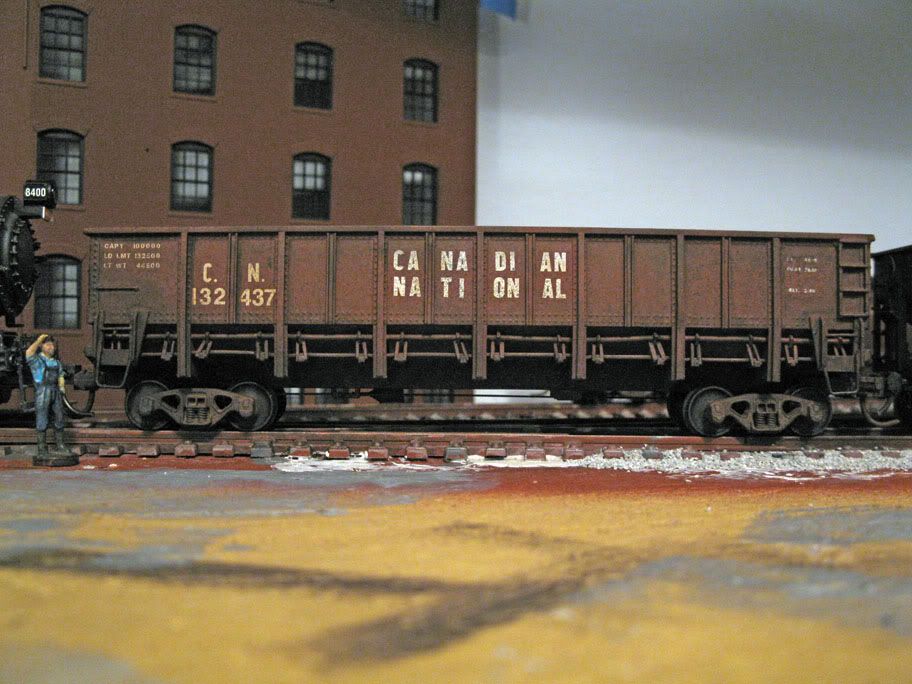
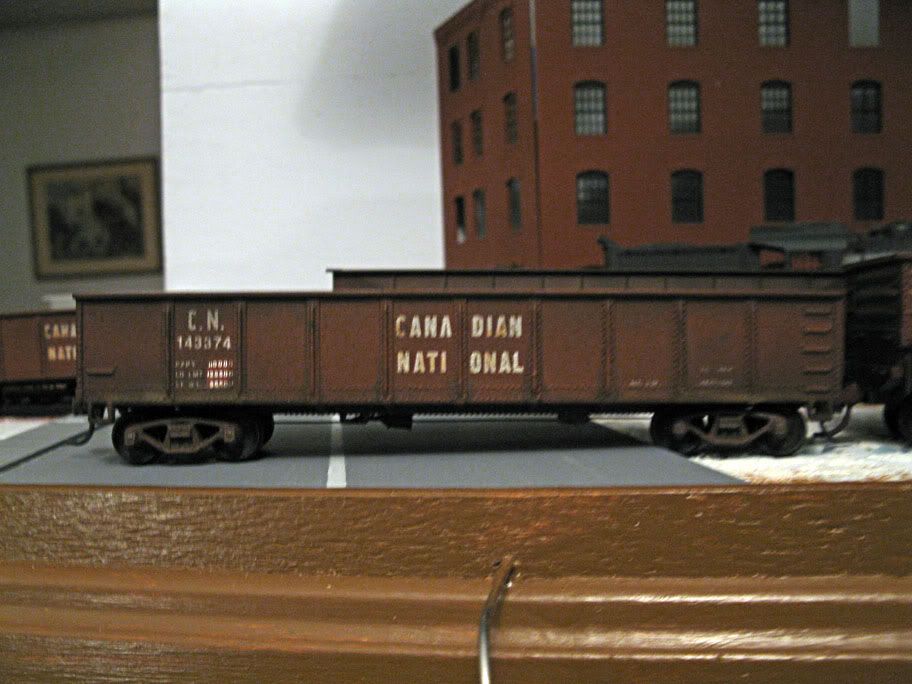
For the last year, I practiced weathering on cheap trainset quality cars. Since the result wasn't half bad and the layout needed an important fleet of gondolas and hoppers, I decided to upgrade all my cheap stuff instead of wasting a large amount of money on cars that wouldn't be prototypical according to canadian standards (CNR). All cars were repainted with Krylon Brown Primer (spray can), relettered using various dry transfer letterings/decals and weathered with highly thinned black washes, oil paints in mineral spirit and pastel chalk. Everything was sealed under a generous coat of Dullcoat.


IHC 40' Quad Hopper

This one started as a cheap IHC President's Choice Christmas Trainset 40' quad hopper. The quality of the cast-on details is far better than one may think at first. Follow the work in progress here.


Bachmann 40' Quad Hopper

A batch of four Bachmann 40' quad hoppers also received the same treatment. However, the cast-on details are a little bit thicker than IHC mold. Follow the work in progress. Follow the work in progress here.


Bachmann 40' Gondola
 
The next try was a major rebuilt of four Bachmann 40' unprototypical gondolas. They have been converted into drop bottom gondolas. They follow accurately a prototype built for CNR back in the 30's and still seen in use at least in the 80's.


Model Power 40' Gondola

The last ones are a set of five Model Power 40' gondolas. Cast-on detail is cheap and brake wheels were replaced by spare parts. The brake details on the underframe are from Accurail.

Thursday, March 31, 2011

Half-Turntable for Hidden Space

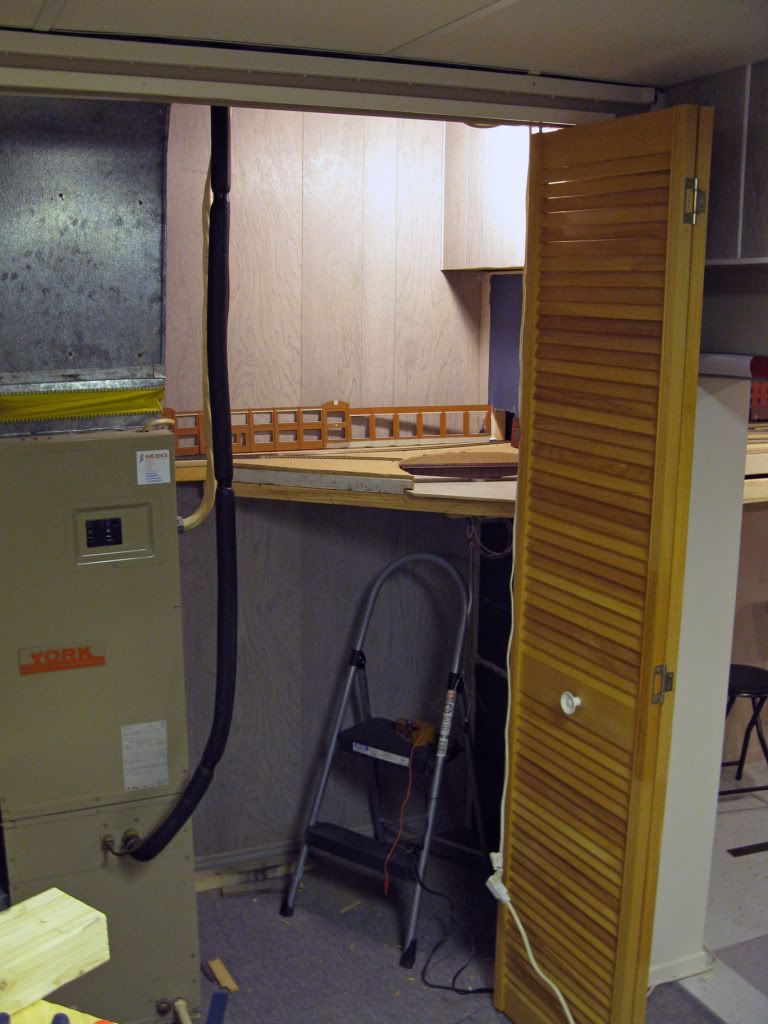
Since the day we decided to use steam power for the layout, we had to face a major historic problem... turning our engines. It is impossible to add a turntable to the existing shelf layout because of technical and operational issues.

Until yesterday, it was done manually, by the Hand of God, at the risk and peril of breaking small details. In fact, we almost never turned them.

On last Wednesday club meeting, I told my fellow members it was time to install a new turntable and that the best location for it would be in the furnace closet actually used as a tunnel to join the under construction Murray Bay Subdivision. The idea was welcomed coldly at first, but the spectacular and creative solution that appeared by the end of the night surpassed all our expectations.

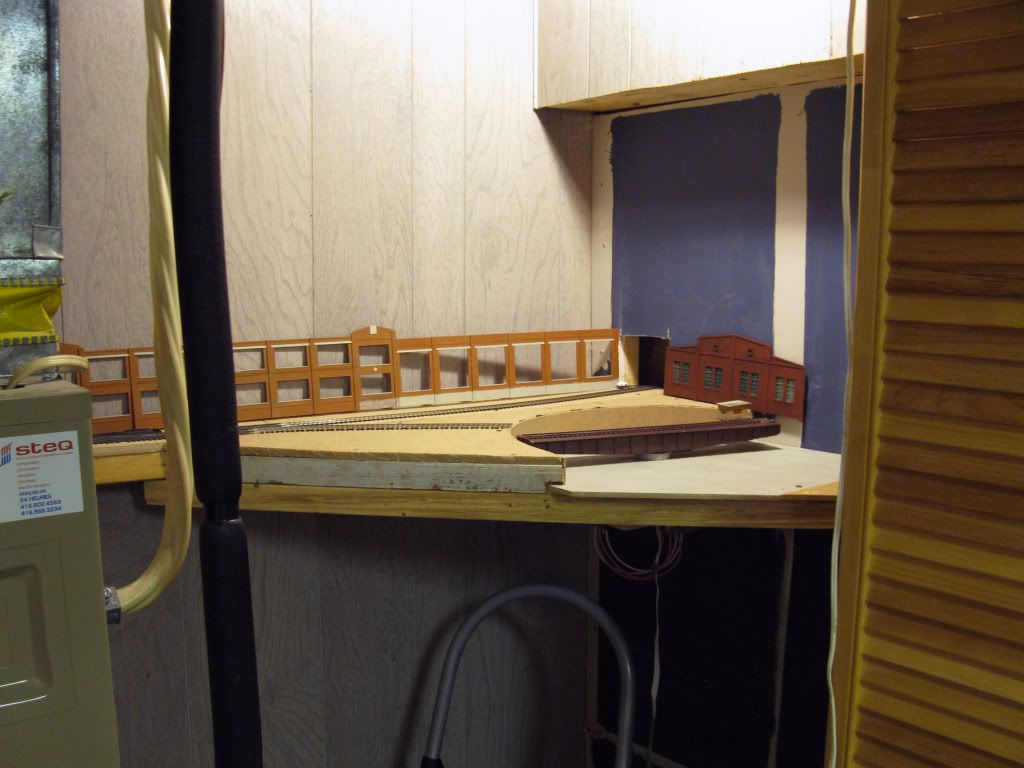
The shop district located in the furnace closet.


One have to know Louis-Marie once scratchbuilt a large turntable for our President’s Choice 4-6-4. Operation was unreliable and the roundhouse proved to be a waste of time and energy since it almost never served as much as intended.
The main layout is located on the other side of the tunnel (right corner).


This time, the track plan is the simpliest you could dream of: a single spur with half-a-turntable located on a triangular 2’ x 3’ benchwork. The operation is straight forward: turning locomotives between duties.

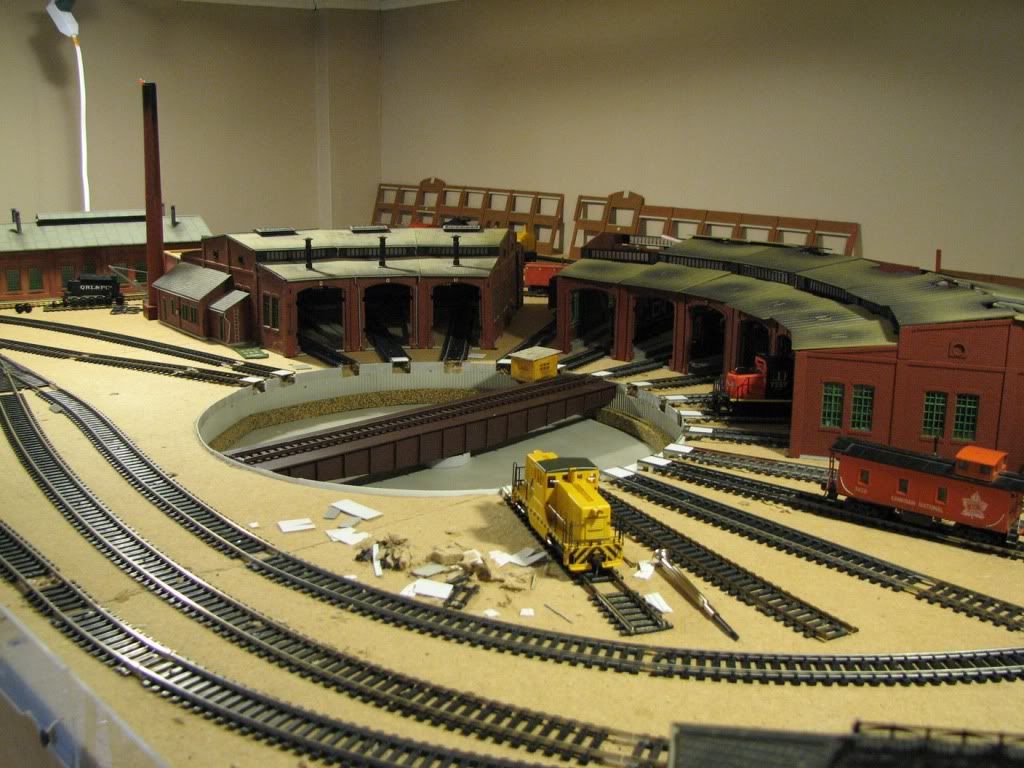
Original turntable and roundhouse from the previous layout.


The old scratchbuild 16” (116 scale feet) turnatable from the previous layout was scavenged from the garage and reinstalled (it works with a magnetoscope motor). Since we lacked place and don’t plan to store engine there, the index system has only one position. Also, we further slimmed the turntable by creating an open pit, something I’ve never seen on any layout. We think it gives a really interesting sight for locomotive.

Mock up scenery made with Vollmer roundhouse parts.


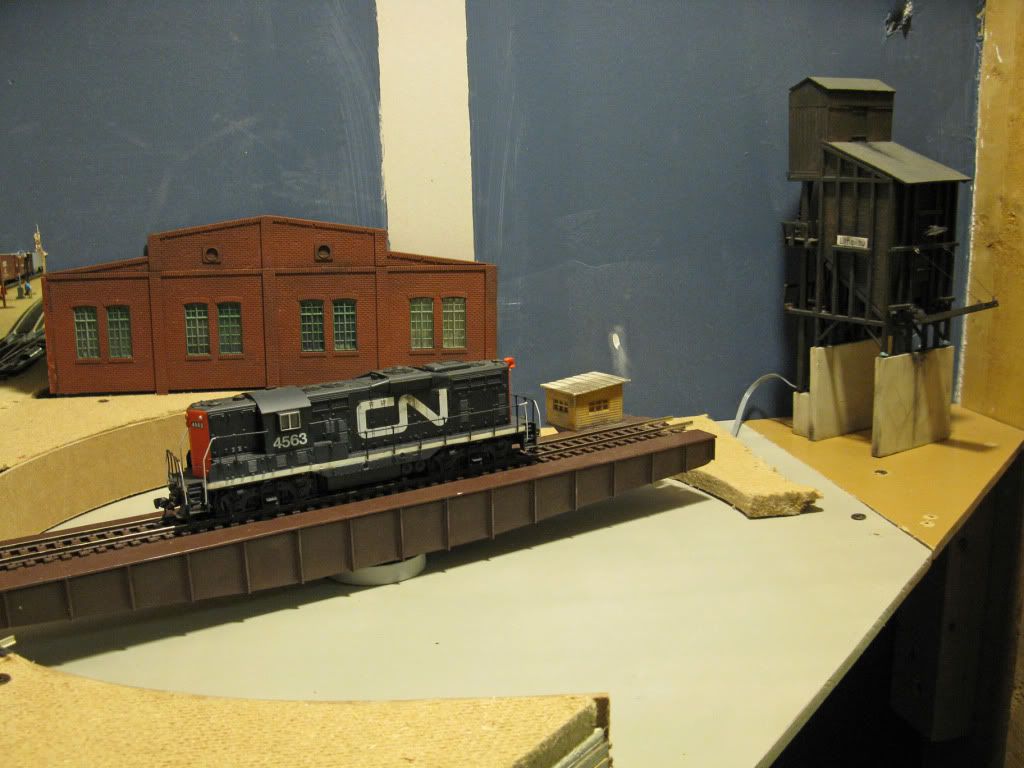
A bunch of discarded Vollmer roundhouse facades were added to mock up a “railway shop” looks and the kitbashed Limoilou coal tower found its way back on the layout. To make room for a better scenery, the turntable will be move a few inches more from the wall to install backdrop buildings.

Limoilou coal tower nested in the back corner.